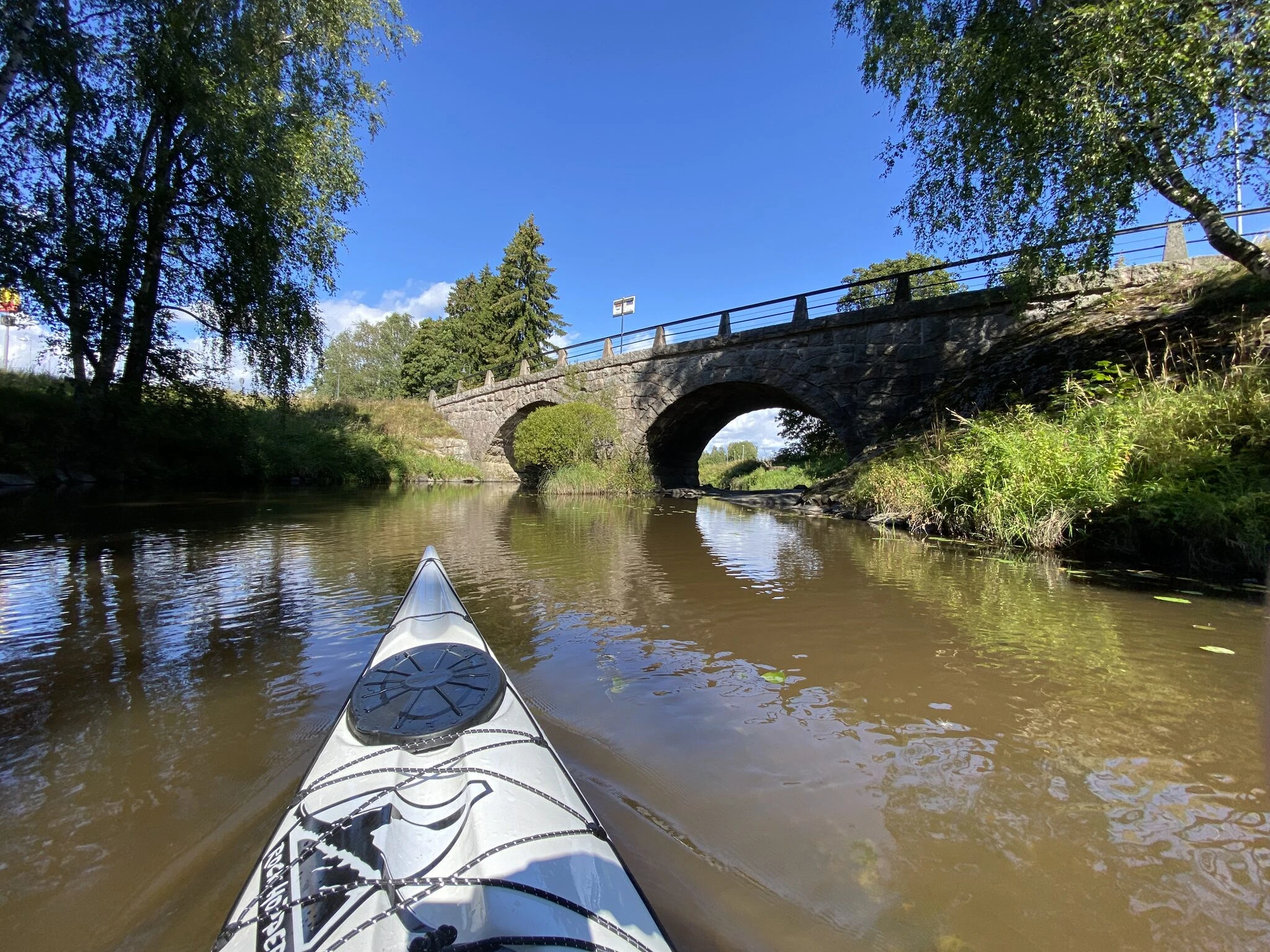
The River Vantaa is an ancient route of passage
The river connected the inland areas with the sea long before the founding of the City of Helsinki. Trade and fishing took place along its banks. Mills and sawmills were built on the riverside, and the river was used for transporting timber as well as serving as an ice road in winter.
With industrialization, the river became polluted, and its condition was at its worst in the 1960s. Since then, the water quality has improved. The River Vantaa also served as a water source for the people of Helsinki between 1876 and 1982, and today, the Old Town Waterworks functions as a museum.
The waters of the River Kerava also flow into the River Vantaa
The River Kerava joins the River Vantaa at the northern border of Helsinki. The Kerava River runs narrow through Tikkurila, and its most famous rapid is Kirkonkylänkoski, where remnants of old dams can still be seen. Next to the Kerava River, on the Vantaa side, lies the village of Helsingin pitäjän kirkonkylä, home to St. Lawrence Church, built in the 15th century. It is the oldest surviving building in the Helsinki region.
The River Vantaa is 100 kilometres long
The River Vantaa is the 26th largest river in Finland and originates from Lake Lallu near the town of Riihimäki. About one fifth of Finland’s population lives within the river’s catchment area—its importance is therefore far from insignificant.
The river’s flow varies greatly. During dry periods, the water moves calmly, but during floods, the current can increase more than a hundredfold. At flood times, the rocks in the rapids are submerged by rushing waters, and the water level can rise several metres. As a result of variations in flow, water level, and rainfall, the water is occasionally turbid.
The River Vantaa freezes almost every winter. The spring breakup of the ice is a spectacular but brief natural event. The dramatic finale is seen when the rapids at Vanhankaupunginkoski crush the ice floes into fragments that melt into the Baltic Sea within a few days.
In winter, the white-throated dipper can be spotted at the open water near the rapids
The River Vantaa is Helsinki’s most significant freshwater environment and is known for its rapids. On both sides of the river runs a recreational trail that follows the flow throughout Helsinki.
At the southern mouth of the River Vantaa lies the Vanhankaupunginkoski rapid, 150 metres long with a six-metre drop, and the city’s most famous fishing spot. Each autumn, thousands of trout ascend the rapids, while whitefish spawn in the calmer pools.
At Helsinki’s northern border flows Pitkäkoski, over a kilometre long and resembling a wilderness area, surrounded by protected slope groves, tall spruces, and hazel bushes. The rapids continue to Ruutinkoski, where the calm water widens into a small lake.